
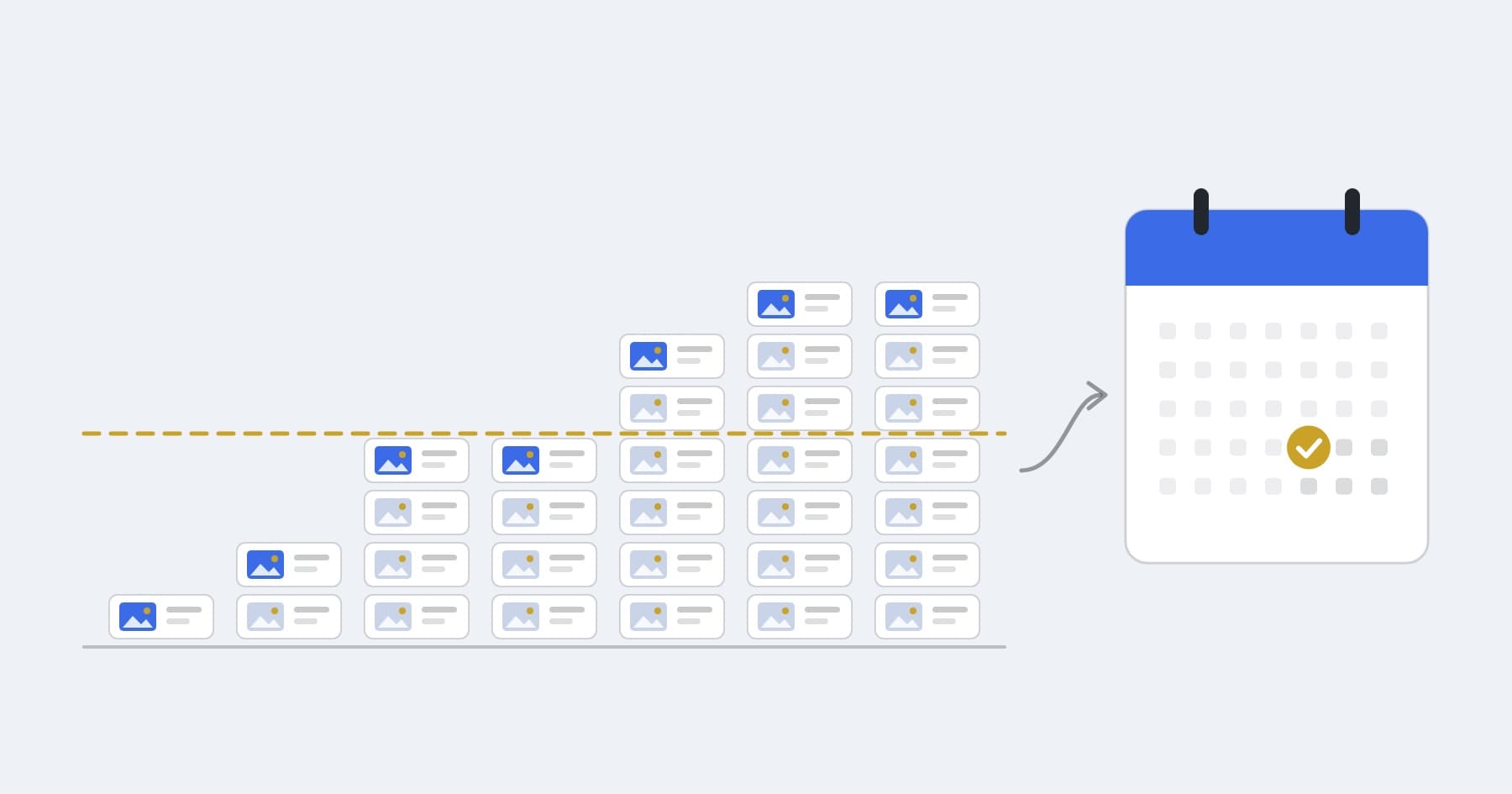
Promise the turnaround you can hit in your busiest month, not the one you hit in spring. For most wedding photographers that means a sneak peek within 48 hours and the full gallery within 6 to 8 weeks in peak season, written into the contract as a date range. In the worked example below, the same photographer delivers an April wedding in 1 week and an October wedding in 7, with no change in effort. If they had promised the 4 weeks they managed in early summer, 13 of their 30 couples would have received the gallery late.
Key takeaways
- Turnaround is a queue. Weeks of wait roughly equal the editing hours waiting in line divided by the hours you edit per week.
- The queue grows every week your shoots add more editing hours than you can work through, so autumn clients wait longest.
- Fix the promise first (quote your peak), then fix the queue (add editing hours before August, or outsource culling).
- If your contract names no delivery time, the law fills the gap. In the UK that is "a reasonable time", and albums or prints sold to consumers carry their own 30-day default.
Why does turnaround get worse as the season goes on?
Because every wedding adds editing hours to a line, and the line only shrinks in weeks when you edit more than you shoot. Take a photographer with 30 weddings a year, about 24 hours of culling, editing, exporting and uploading per wedding, and 20 hours a week at the desk from May to October (30 hours a week outside the season, when there are no shoot days to recover from). These are example numbers. Swap in your own.
From May to October, 28 of those weddings need 672 editing hours, and the 26 season weeks offer 520. The gap does not show up in May. It accumulates, and it lands on the couples who marry last.
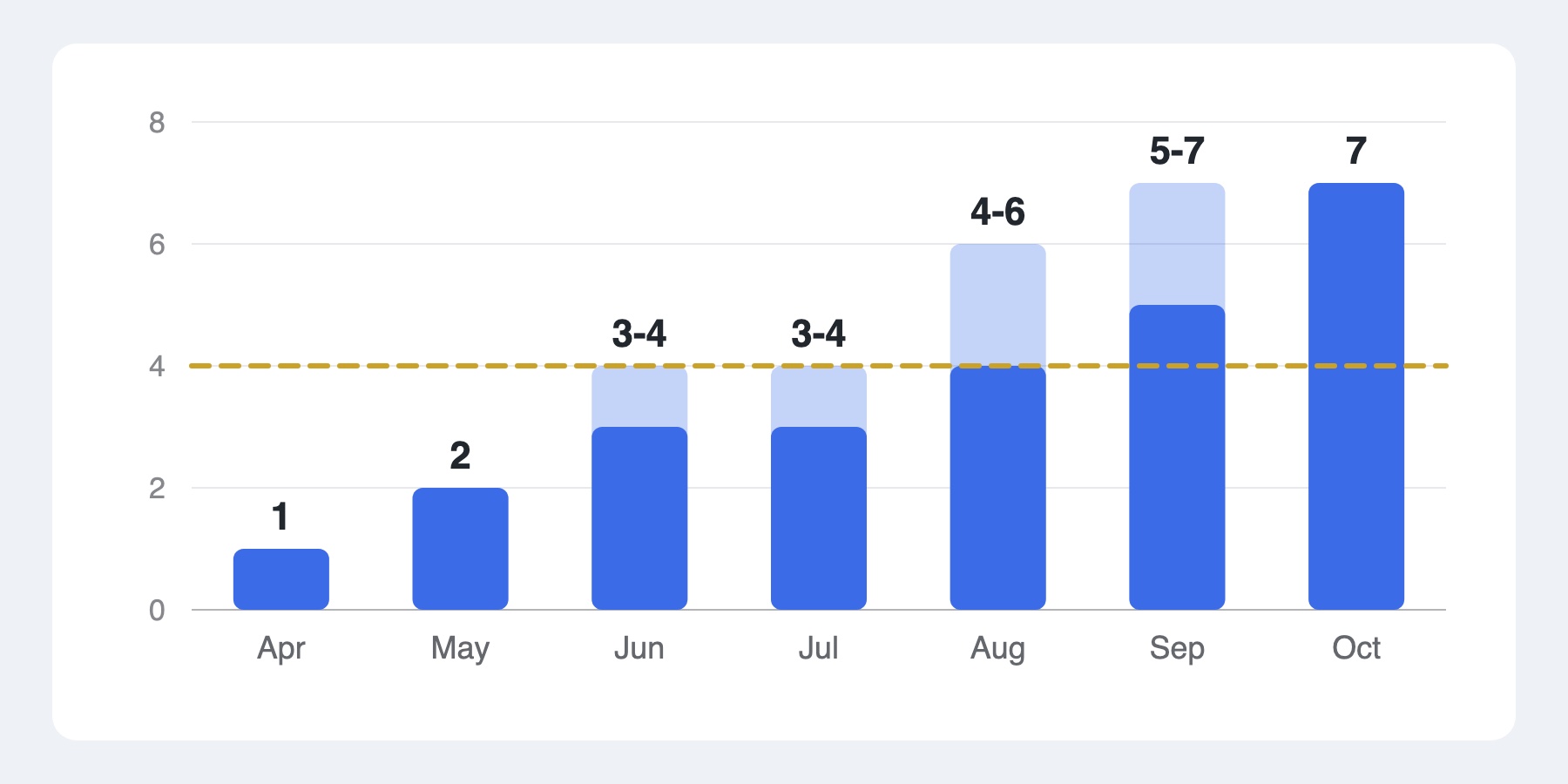
| Month of the wedding | Weddings | Weeks until the gallery is finished |
|---|---|---|
| April | 2 | 1 |
| May | 5 | 2 |
| June | 4 | 3 to 4 |
| July | 4 | 3 to 4 |
| August | 5 | 4 to 6 |
| September | 6 | 5 to 7 |
| October | 4 | 7 |
Weeks are counted from the wedding to the end of the week the last edit is done, with galleries worked first in, first out.
How do you calculate your real turnaround?
Divide the editing hours sitting in your queue by the hours you actually edit per week. At the end of September our example photographer has 156 hours of unedited weddings waiting and edits 20 hours a week, so a wedding shot that Saturday waits 156 / 20 = 7.8 weeks at season pace. In the model it comes out at 7 only because desk hours go back up to 30 in November. That single division is the most honest number you can put in a contract.
To get your own version, list every booked shoot for next season, multiply each by your real editing hours for that type of job (time it on three jobs, do not guess), and compare the running total with your weekly desk hours. The week where the running backlog peaks is the week your contract has to survive.
What turnaround should you promise?
The peak number plus a small buffer, stated as a range. For the example photographer that is "up to 8 weeks for the full gallery", and most couples will get theirs sooner. Here is how often each promise breaks in the model:
| Promise in the contract | Couples delivered late |
|---|---|
| 3 weeks | 21 of 30 |
| 4 weeks | 13 of 30 |
| 8 weeks | 0 of 30 |
An early gallery feels like a gift. A late one feels like a broken promise, even when it arrives faster in absolute terms. A couple told "8 weeks" who receive the gallery in 5 is happier than a couple told "4 weeks" who wait 5.
How do you shorten the queue instead?
Add editing hours before the backlog builds, not after. Two changes in the model, each tested separately:
| Change | Longest wait in the season |
|---|---|
| Nothing changed | 7 weeks |
| One extra 8-hour editing day per week from August 1 | 4 weeks |
| Outsource culling, saving 6 of the 24 hours per wedding | 3 weeks |
Outsourced culling saves 180 hours across 30 weddings. Whether it pays depends on what a culling service charges against what your own hour is worth, so price it against your rate before the season, not in October when the line is already long. The extra editing day only works if it starts early. In the model, starting the same day on October 1 cuts the longest wait from 7 weeks to just 6, because more than 150 hours are already waiting by then.
What does the law say if your contract names no delivery time?
It fills the gap for you, and not always in your favour. This is general information, so check the rules where you work.
- United Kingdom: if a consumer service contract does not fix a time, the Consumer Rights Act 2015, section 52 treats it as including a term that you perform it "within a reasonable time", and what is reasonable is "a question of fact". A judge, not you, decides whether 14 weeks was reasonable.
- Albums and prints sold to UK consumers are goods. Unless you agree a time, section 28 requires delivery "without undue delay" and no more than 30 days after the contract. A wedding package that includes an album should therefore say when the album clock starts, for example when the couple sends their album selections.
- United States: delivery time for the photography itself is a matter of your contract and state law. The FTC's Mail, Internet, or Telephone Order Merchandise Rule requires a reasonable basis for any shipping time you state, or for shipping within 30 days if you state none. The FTC says the rule "does not cover services, such as mail order photo-finishing", so whether a specific album or print order counts as merchandise is a question for a lawyer. Stating a shipping time on every product order is the safe habit either way.
What should you tell clients, and when?
Five messages keep a long queue from feeling like silence:
- At booking: the delivery range in the contract, with the date it is counted from.
- Within 48 hours of the shoot: a sneak peek of 10 to 20 finished images. It buys goodwill for the weeks the full gallery spends in line.
- When their wedding reaches the front of the queue: one line saying editing has started and the gallery will arrive by a specific date.
- Before any deadline you will miss: a new date, sent before the old one passes. Telling a client after the deadline turns a delay into a complaint.
- At delivery: the gallery link, how long it stays online, and a deadline for album favorites if an album is included.
Where Ultra fits (disclosure included)
Ultra is our product, so weigh this section accordingly. It does not edit faster for you, and it does not send the "editing has started" message on your behalf. You still write messages 3 and 4 yourself. What it does handle is the delivery end: you can put a sneak peek in a small password-protected folder the night of the shoot, invite the client by email, and let them mark favorites and leave notes on individual photos. Those favorites become the album selection, so the album clock starts from a click instead of a long email thread.
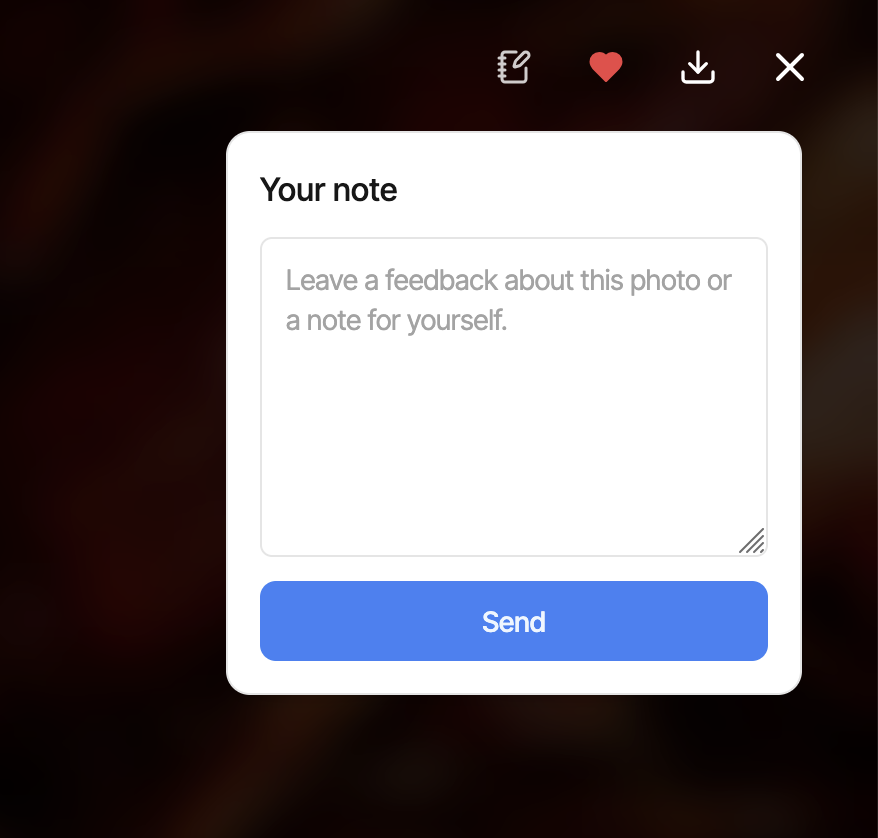
Favorites, photo notes, password-protected and auto-expiring folders are on every plan, including Starter at $5 a month (pricing, as of October 16, 2026). See the client galleries page for the full delivery flow. If the gallery is part of a longer client process, the article on how much deposit to charge covers the booking end, and how long to keep client photos covers what happens after delivery.