
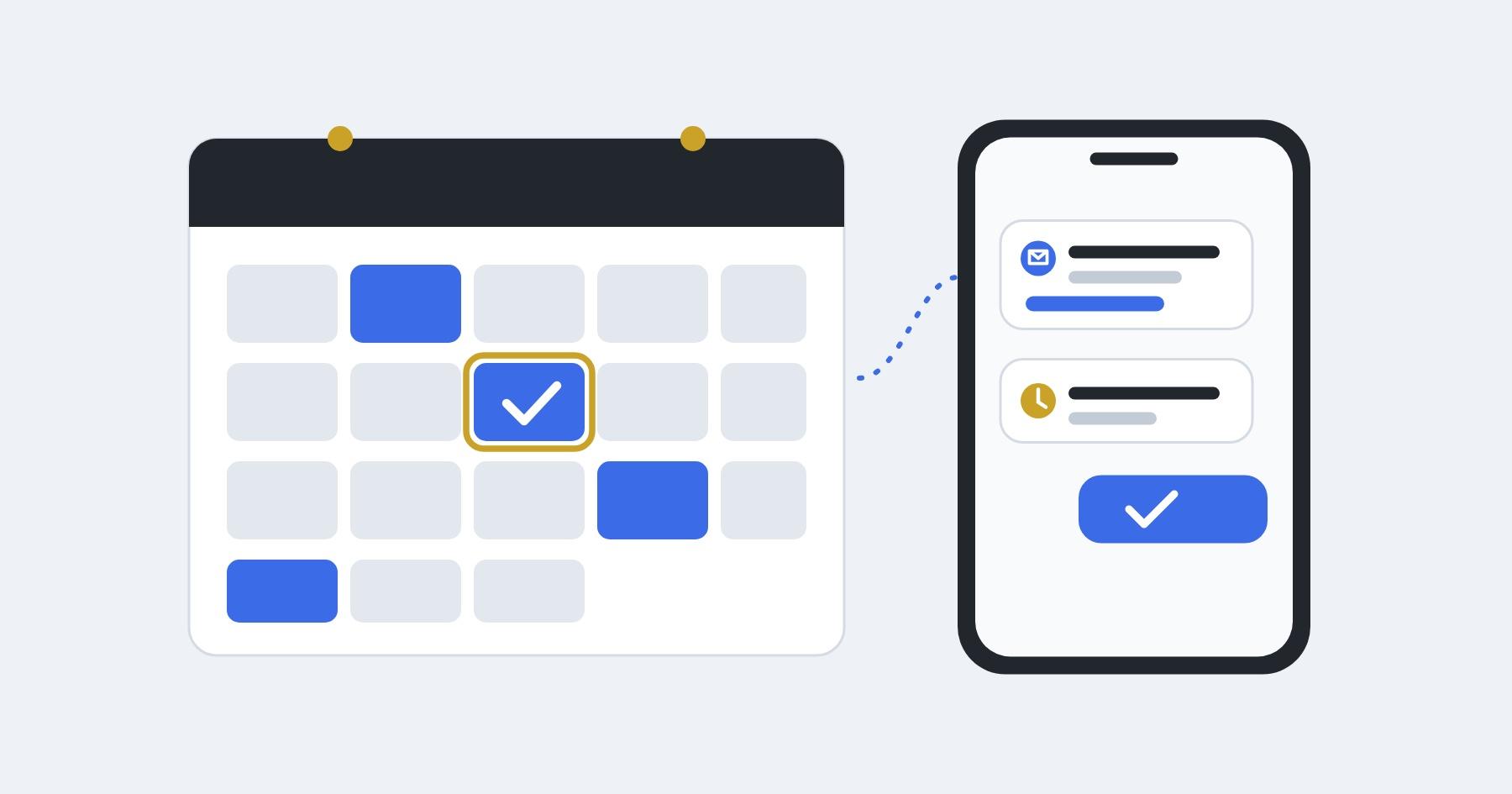
To reduce no-shows, send two reminders (one about 48 hours out with a reschedule link, one on the morning of the session), time the first one so it lands before your cancellation cutoff, and take a deposit at booking. In clinic trials, a text reminder raised attendance from 67.8% to 78.6%, which means about a third fewer missed appointments. On a 60-session year at $300 a session with 4 no-shows, cutting a third of them keeps about $400. The texts to do it cost about $1.60.
Key takeaways
- A no-show usually costs you the whole session fee, because a slot freed on the day rarely gets rebooked.
- Reminders are the best-studied fix: text reminders cut missed clinic appointments by about a third in a Cochrane review of randomized trials.
- Send the first reminder before your cancellation cutoff. A reminder that arrives after it shows the client a link that no longer works, and a client with no way to cancel tends to just not come.
- Make rescheduling easier than skipping. A client who can move the session in two taps has an easy alternative to just not coming.
- A deposit does not stop every no-show, but it turns the ones that still happen into a smaller loss.
How much does one no-show cost you?
One no-show costs you the full fee for that slot, plus the time you spent getting ready and travelling. Unlike a cancellation two weeks out, a slot that empties on the day rarely sells again.
Here is the model we use in the rest of this article. These are example numbers, not industry data; swap in your own.
| Input | Example value |
|---|---|
| Sessions booked per year | 60 |
| Session fee | $300 |
| No-shows per year before any changes | 4 (about 1 in 15) |
| Reminders per booking | 2 |
Four no-shows at $300 is $1,200 a year of work you had planned for and did not get paid for. That is before the hour of prep and the drive.
Do appointment reminders actually reduce no-shows?
Yes, and this is the best-studied piece of the problem. A Cochrane review of randomized trials (Gurol-Urganci and colleagues, 2013, 7 studies and 5,841 people for this comparison) found that text message reminders improved attendance at healthcare appointments compared with no reminder, with a risk ratio of 1.14. Attendance was 67.8% with no reminder and 78.6% with text reminders. Phone call reminders worked about as well as texts (80.3%) but cost more per attendance.
Two honest caveats. These were clinic appointments, not photo sessions, and the authors rate the evidence as low to moderate quality. Your clients have more reason to show up (they chose you and probably paid something), so your no-show rate starts lower. What carries over is the mechanism: people mostly miss appointments because they forget or because something changed and replying felt awkward. Reminders address both.
If we apply the same one-third cut to the model: missed clinic appointments fell from 32.2% to 21.4%, a drop of 33.5%. Four no-shows become about 2.7 a year.
| Scenario | No-shows per year | Fees lost per year |
|---|---|---|
| No reminders, no deposit | 4 | $1,200 |
| Two reminders per booking | about 2.7 | $798 |
| Two reminders + 25% deposit kept on a no-show | about 2.7 | $598 |
Reminders alone keep about $402 a year. Add a 25% non-refundable reservation deposit and the loss on each remaining no-show falls from $300 to $225, so together they keep about $602.
What does it cost to send reminders?
Email reminders cost nothing. Text reminders cost about a cent each in the US. Twilio's US SMS price is $0.0083 per message segment, plus a carrier fee of $0.0025 to $0.005 depending on the network (as of October 28, 2026). At the top of that range, 120 texts (two for each of 60 bookings) cost about $1.60. Business texting in the US also needs a one-time sender registration, so check those fees before you sign up.
Put differently: a year of text reminders costs about half a percent of one session. If the reminders save a single session in the next ten years, they have paid for themselves.
When should you send the reminders?
Send them in this order, and set the times from your cancellation cutoff, not from habit.
- At booking. The confirmation with the date, address, and a calendar link. Ask the client to add it to their calendar while they are still on the page.
- Before the cutoff (usually 48 hours out). The date and time, what to wear or bring, and the reschedule link. This is the one that saves sessions, because it reaches people while they can still move the date without guilt.
- Morning of the session, or 2 to 3 hours before. Address, parking, your phone number. No link to reschedule here; this one is about getting them to the right door.
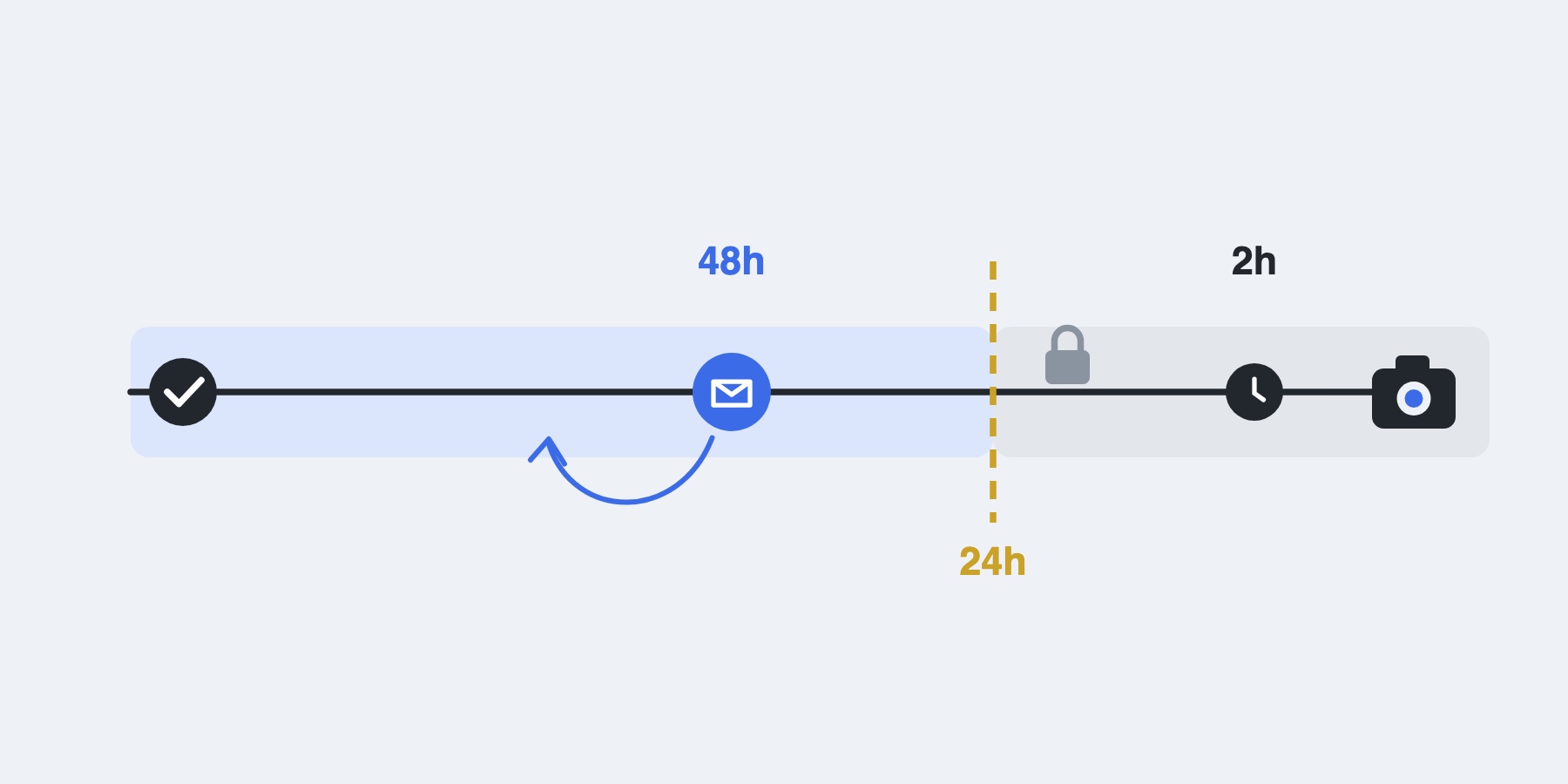
The rule behind step 2: the reminder must land before the cutoff. If clients can reschedule themselves up to 24 hours before, a reminder sent at 24 hours points them at a button that has just stopped working. Now the only options left are to message you and apologize, or to stay home. Some will choose the second. If your cutoff is 48 hours, send the reminder at about 72.
Should you let clients cancel and reschedule themselves?
Yes, with a cutoff. A client who can move the session in two taps has no reason to quietly not show up, and you get the slot back with enough notice to fill it. The cutoff protects you from the 7 a.m. cancellation; the reminder before the cutoff makes sure the client actually uses the window.
Pick the cutoff by how fast you can refill a slot. If you have a waiting list for mini sessions, 24 hours is enough. For a full session that needs a week of lead time to sell, set 72 hours or a week, and move reminder 2 earlier to match.
Does a deposit stop no-shows?
A deposit reliably reduces the cost of a no-show; its effect on how often they happen is less certain. It probably helps, but we have no trial numbers for photography, so the model above only counts the cost side. How much to take, and what you can keep when someone cancels, depends on your contract and on local consumer law. Our deposit guide walks through the numbers and the rules country by country.
What should you send after a no-show?
Send one short, friendly message within the hour: "We missed you at 10:00 today. Is everything all right? If you would like to rebook, here is the link." Then follow your written policy, which should already say what happens to the deposit.
Most no-shows are forgetting, not bad faith. A calm message leaves the door open to a rebooking, and the client remembers how you handled it.
Can a reminder include a promotion?
Keep reminders about the session only. In the UK, the ICO treats messages that "confirm or remind them about appointments" as service messages, but its guidance also says a service message with marketing elements "will count as direct marketing", which brings consent rules with it. Other countries draw the line in their own way, so this is general information; check your local rules before adding a holiday mini session offer to a reminder.
What Ultra does here, and what it does not
Ultra is our product, so weigh this section accordingly. On the Pro plan ($7 a month or $84 a year, as of October 28, 2026, on the pricing page) the online booking page sends the client a confirmation email with a "Manage your booking" link. From it, clients can cancel or reschedule themselves. You choose the cutoff per session type, from "No minimum" up to a week before (the default is 24 hours), or turn self-service off. The confirmation page gives the client a Google Calendar link and an .ics file to add the session to their calendar.
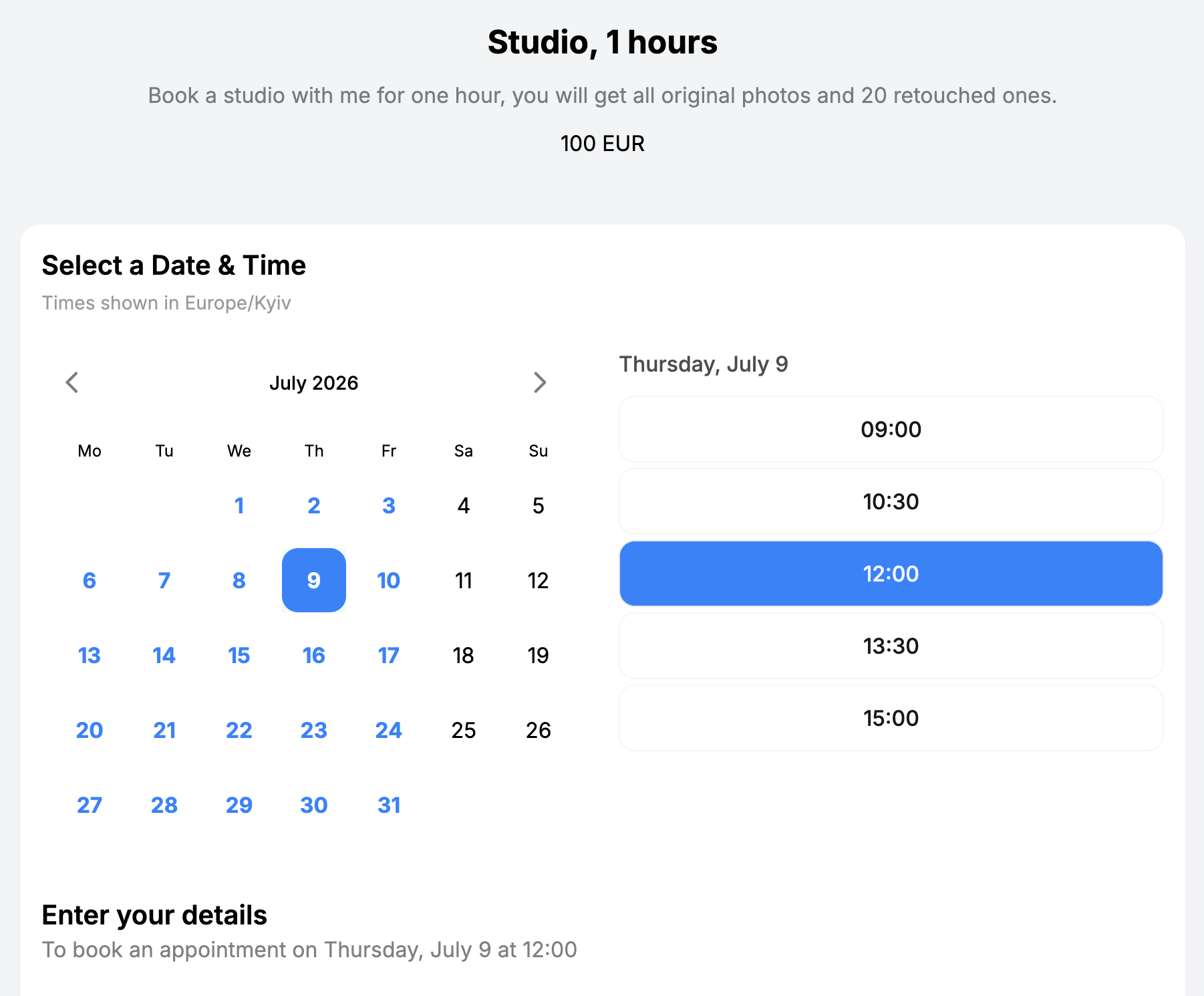
What it does not do: Ultra does not send reminder emails or texts today, so steps 2 and 3 above are yours to send (a recurring calendar note for yourself works). The calendar file has no alert of its own, so the client gets whatever default alert their calendar uses. Taking a deposit by card at the moment of booking is marked "coming soon" on the booking page; for now you can show the price and payment instructions in the confirmation.
If you want to see what each way of taking that deposit costs over a year, our payment fees breakdown does the math.